

Assetara Unveils AI Trading Ecosystem Integrating Automated Execution with Risk Controls and Blockchain Verification
AI can reduce emotional investing, but it also introduces risks tied to data quality, model assumptions, transparency, and oversight. Here’s what investors should evaluate.
VICTORIA, Seychelles, June 23, 2026 (GLOBE NEWSWIRE) --
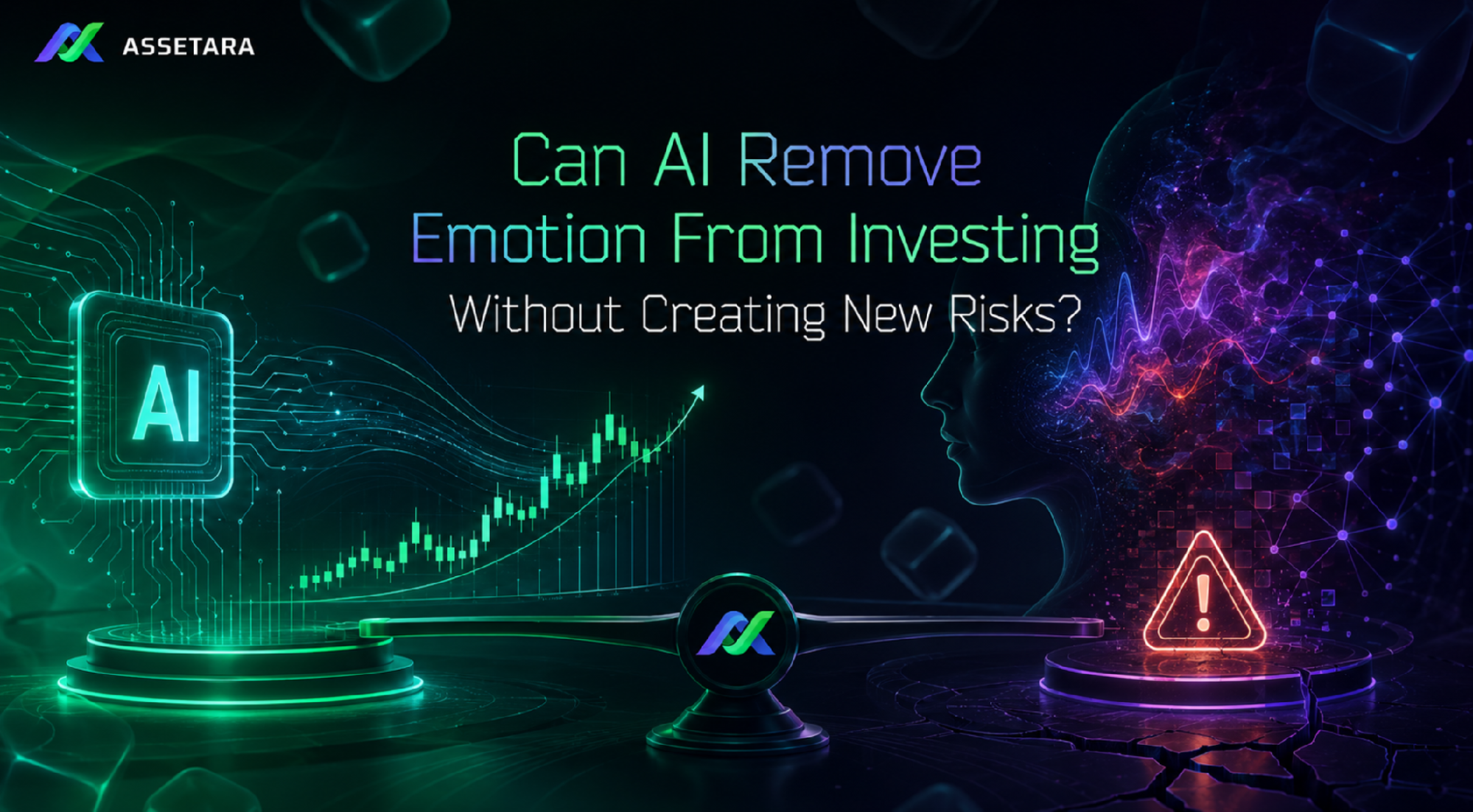
Assetara today announced its ecosystem that combines an AI trading engine with staking, decentralized governance, smart contracts, and digital-asset infrastructure. The platform is designed to analyze market data, identify trading opportunities, and manage portfolios through automated processes while incorporating mechanisms for risk management and operational transparency.
Fear and greed have shaped financial markets for as long as people have traded. Investors sell during sudden declines, chase assets after prices have already risen, and abandon carefully designed strategies when short-term results become uncomfortable.
Artificial intelligence promises a different approach. An algorithm does not panic after reading a headline, become attached to a losing position, or make a trade because everyone else appears to be making money. It can process large volumes of data, follow predetermined risk rules, and execute decisions without hesitation.
That makes AI particularly attractive in volatile markets such as cryptocurrency. But removing emotion from investment decisions does not remove risk. In some cases, it may simply replace familiar human weaknesses with less visible technological ones.
From investment assistant to decision-maker
AI has already moved beyond research and customer support in financial services. Firms are using it for market analysis, portfolio recommendations, sentiment monitoring, risk assessment, and trading. FINRA has reported that securities firms are exploring AI applications for brokerage account management, portfolio management, trading, compliance, and risk management.
The next step is automated execution. Instead of presenting information to an investor who makes the final decision, a system can analyze market conditions and place trades according to its model.
Platforms such as Assetara are being developed around this idea. The company says its ecosystem combines an AI trading engine with staking, decentralized governance, smart contracts, and digital-asset infrastructure. Its materials describe a system designed to analyze market data, identify possible trading opportunities, and manage portfolios with less reliance on manual decisions. The appeal is easy to understand. A machine can monitor markets continuously and react faster than a person. It can also apply the same rules consistently, even when prices move sharply.
“Emotion is one of the most persistent sources of inconsistency in investing, but removing it is only the first step,” said Henrik Falk-Lund, CEO and co-founder of Assetara. “An effective AI system must also operate within clear risk limits, provide understandable information to users, and remain accountable to human oversight.”
Consistency is not the same as accuracy
An algorithm can apply the same rules consistently, but consistency does not guarantee accuracy. Its decisions still depend on the quality of the data it receives, the assumptions built into the model, and the market conditions in which it operates.
A strategy that performs well during a stable or rising market may behave very differently during a liquidity crisis, regulatory shock, or sudden change in investor behavior. Historical relationships can break down. Data can be incomplete. A model can continue following its instructions even after those instructions have stopped producing sensible results.
This creates a central paradox. The discipline that makes an algorithm attractive can also make it dangerous. A human investor may hesitate or reconsider. A poorly controlled automated system can execute the same flawed decision repeatedly and at speed.
Regulators have been warning about this risk for years. FINRA has warned that as algorithmic strategies have come to account for a substantial share of activity in US securities markets, their potential to adversely affect both firm and market stability has also increased. The Bank for International Settlements has also cautioned that widespread reliance on similar AI models could cause institutions to respond to market stress in the same way, potentially intensifying price movements.
The black-box problem
There is also the question of explainability. Some AI models can produce a recommendation without giving users a clear account of how they reached it.
That may be acceptable when an algorithm recommends a movie. It is more serious when the same kind of opacity affects a person’s savings.
Investors need to know more than whether a platform uses AI. They need to understand what the system is designed to do, which assets it trades, what controls limit losses, how performance is measured, and when human intervention is possible.
The term “AI” itself is not evidence of sophistication or safety. In 2024, the US Securities and Exchange Commission charged two investment advisers over false or misleading statements about their use of the technology. FINRA has separately warned investors about “AI washing,” in which companies exaggerate automated trading or risk-management capabilities.
For emerging platforms, transparency may therefore become as important as performance. Assetara says it is using blockchain-based records, smart contracts, multi-signature arrangements, and escrow mechanisms to make parts of its ecosystem more verifiable. Those tools can help establish how transactions are authorized and recorded, but they do not guarantee that an investment strategy will succeed or that every operational risk has been eliminated.
What Investors Should Ask Before Trusting an AI Platform
Before trusting an AI-driven investment platform, investors should look beyond the technology label and ask a few practical questions.
First, what data does the system use? An AI model is only as reliable as the information it receives. Investors should understand whether the platform relies on real-time market data, historical pricing, sentiment signals, or a combination of sources.
Second, how does the platform control risk? Clear limits on position size, portfolio exposure, and automated execution matter more than claims about speed or predictive power. Investors should also know whether the system can pause trading when market conditions change sharply.
Third, can users understand why a decision was made? Full technical transparency may not always be possible, but platforms should still explain the logic behind their strategies, the conditions under which trades are triggered, and the risks users are expected to accept.
Fourth, who can override the system? Human oversight remains essential, particularly during unusual market events. Investors should know whether a qualified team monitors the model and what happens when its behavior falls outside expected parameters.
Finally, are the platform’s security claims independently verifiable? Smart contracts, multi-signature controls, and escrow mechanisms can strengthen operational safeguards, but their value depends on how they are implemented and reviewed.
These questions do not eliminate investment risk. They help distinguish between a platform that uses AI as a marketing label and one that treats automation as part of a broader system of governance, security, and accountability.
A tool for discipline, not certainty
The strongest case for AI in investing is not that it can foresee every market movement. It is that it can help investors follow a defined process.
Assetara’s approach reflects this broader goal: using AI to enforce allocation limits, monitor exposure, detect unusual conditions, and reduce the influence of short-term emotions on a long-term strategy. Human judgment still matters, particularly when setting objectives, evaluating model behavior, and deciding when market conditions require intervention.
The future of automated investing is therefore unlikely to be a simple contest between humans and machines. It will depend on how the two work together.
AI may be able to remove fear, impatience, and overconfidence from an individual trade. But without transparent models, strong controls, independent oversight, and realistic expectations, it can create a new source of overconfidence: the belief that a machine cannot be wrong.
About the company
Platform: https://assetara.ai/en
Telegram Chat: https://t.me/assetarachat
Telegram Channel: t.me/assetara
Youtube: https://www.youtube.com/@Assetara
X: https://x.com/assetaraoffcl
Instagram: https://www.instagram.com/assetara.ai/

Media Contact Information

Leona Gray

media@assetara.ai

Assetara Unveils AI Trading Ecosystem Integrating Automated Execution with Risk Controls and Blockchain Verification
Assetara Unveils AI Trading Ecosystem Integrating Automated Execution with Risk Controls and Blockchain Verification
Legal Disclaimer:
EIN Presswire provides this news content "as is" without warranty of any kind. We do not accept any responsibility or liability for the accuracy, content, images, videos, licenses, completeness, legality, or reliability of the information contained in this article. If you have any complaints or copyright issues related to this article, kindly contact the author above.
